
Mechanical Harvesting & Weed Removal Services
Mechanical harvesting is an efficient solution for managing large quantities of aquatic vegetation. With three different-sized harvesters in our fleet, we can match the right equipment to each project, from small ponds and narrow waterways to large lakes and expansive harvesting operations.
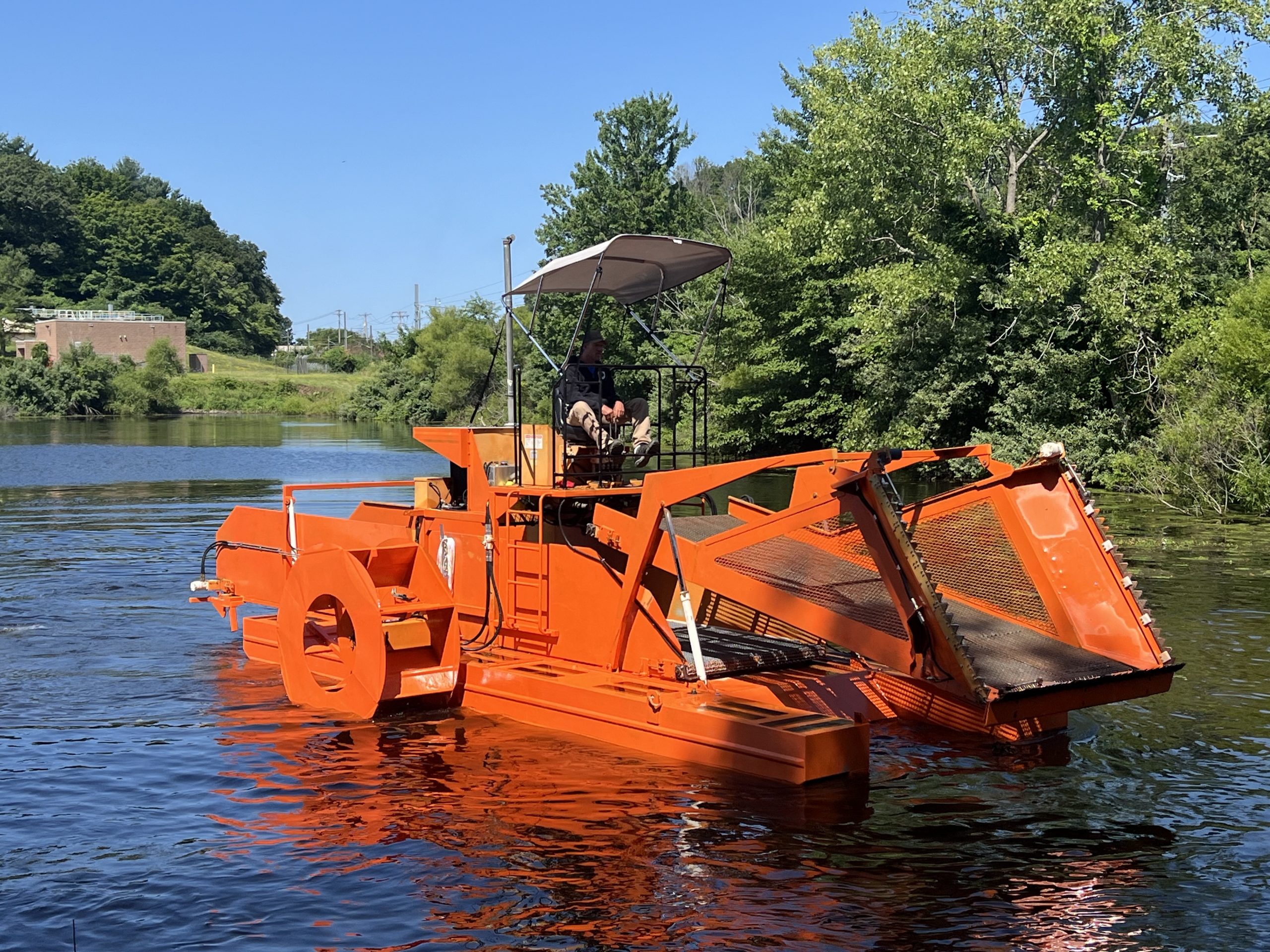
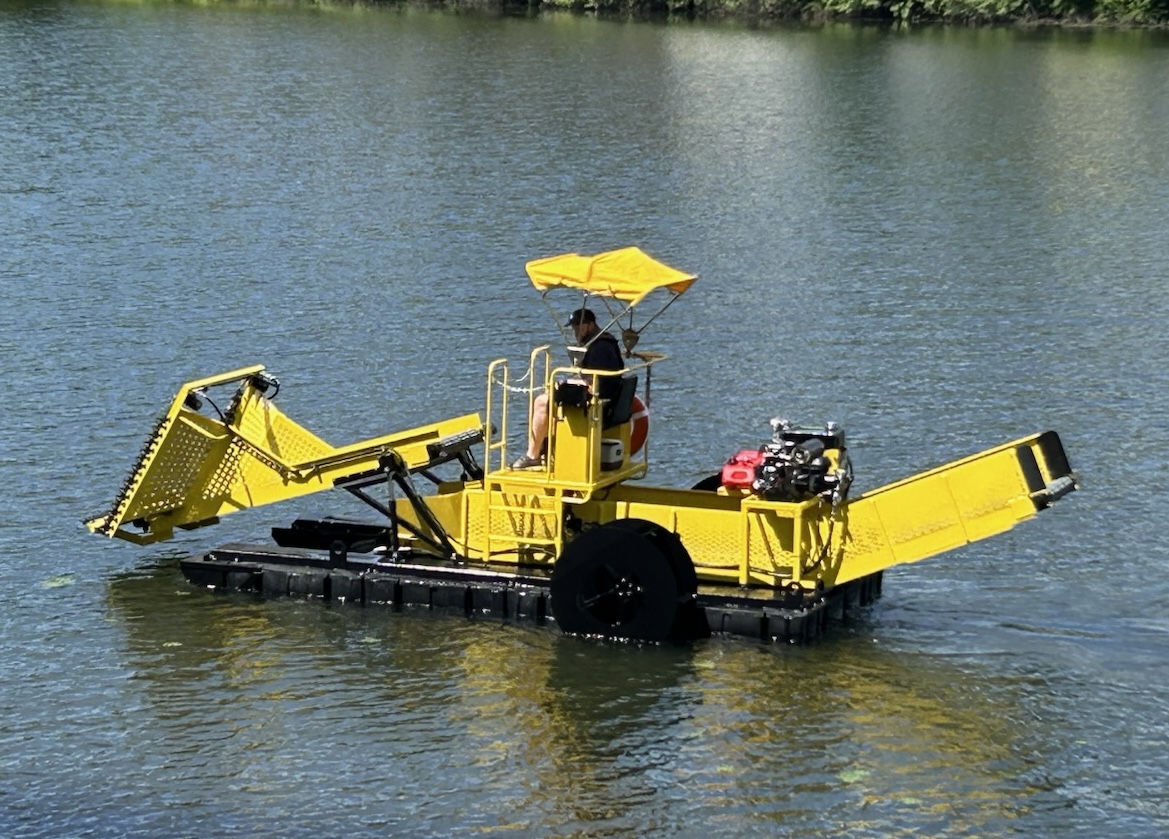
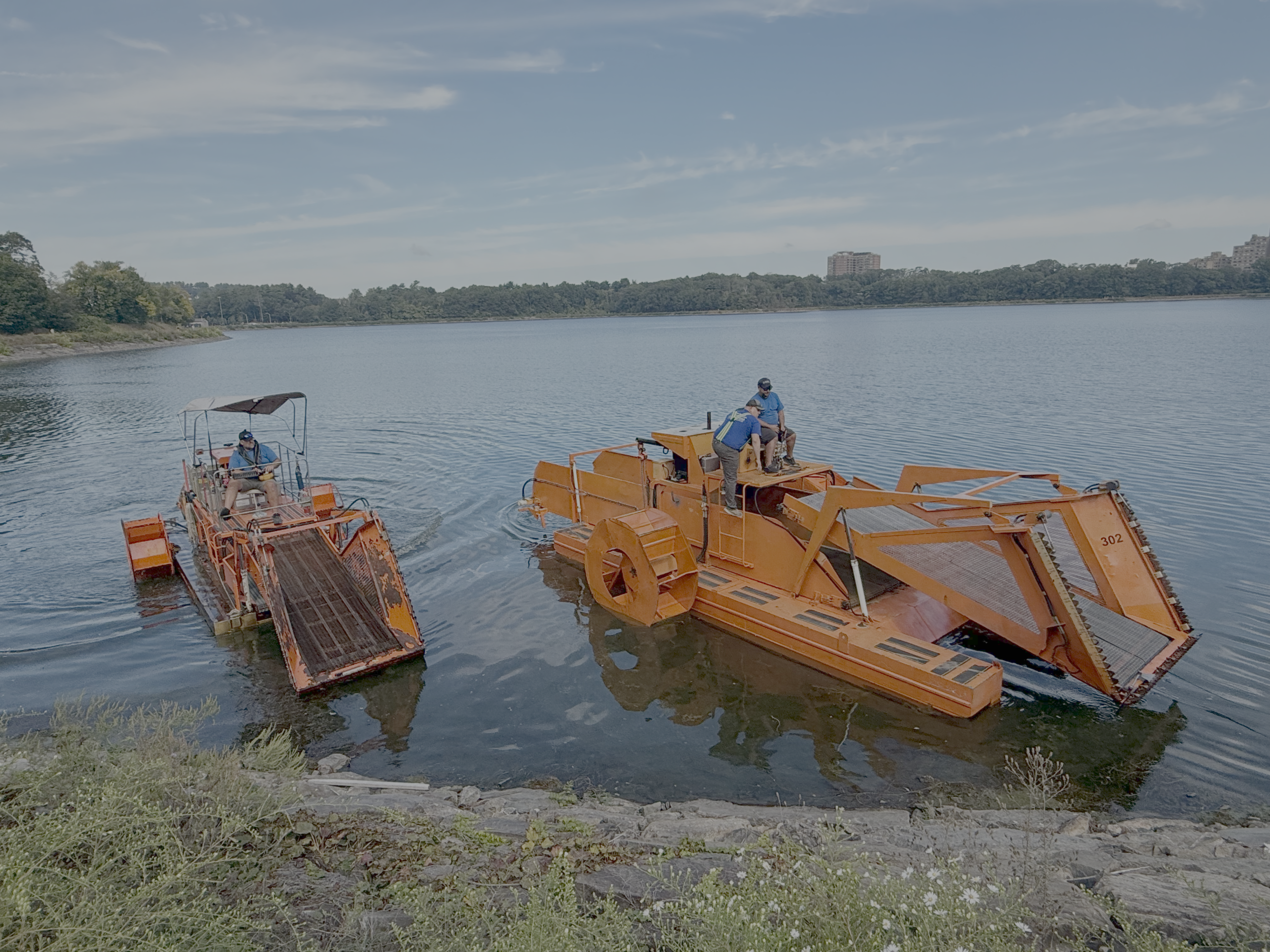
Mechanical harvesters use a submerged cutter bar capable of reaching depths of approximately 5.5 to 6 feet to cut aquatic vegetation below the water's surface. The cut material is immediately conveyed onboard, allowing large volumes of vegetation to be efficiently collected and transported to shore for disposal. By physically removing plant biomass from the waterbody, harvesting also removes nutrients contained within the vegetation, helping to reduce nutrient loading and improve overall water quality.
Mechanical harvesting is particularly effective for managing Water Chestnut, pondweeds, tape grass, and seasonal lily pad growth while restoring navigation, improving recreational access, and enhancing the appearance of lakes and ponds. It also integrates well with other management techniques, including diver-assisted plant removal, hydro-raking, and long-term maintenance programs, creating a comprehensive approach to aquatic vegetation management.